Retaining Walls & Concrete Masonry
Solve drainage and slope problems while adding functional outdoor space with professionally built retaining walls.
Why Properties Need Retaining Walls
Sloped yards create challenges for landscaping, drainage, and usable space. Erosion washes soil downhill, undermines structures, and creates muddy messes. Retaining walls solve these problems by holding soil in place and creating level areas. They turn unusable slopes into functional outdoor space for gardens, patios, or play areas.
Not all retaining walls work the same. Poorly designed or built walls fail quickly, sometimes catastrophically. We see collapsed walls that were built without proper drainage or adequate footing. These failures cost far more to fix than building correctly in the first place. Quality retaining wall construction requires understanding soil mechanics, drainage principles, and structural requirements.
Benefits of Professional Retaining Walls
- Erosion control: Walls hold soil in place and prevent washouts that damage your property and neighboring areas.
- Usable space creation: Level terraced areas provide room for gardens, seating, or other activities on sloped properties.
- Drainage management: Properly designed walls redirect water flow and prevent pooling that damages foundations.
- Property protection: Walls prevent soil movement that can undermine driveways, sidewalks, and building foundations.
- Improved appearance: Well-built walls add structure and visual interest to landscapes while solving practical problems.
We design retaining walls that handle your specific soil conditions and drainage patterns. Cookie-cutter approaches fail because every property has unique challenges. Our experience throughout Merrimack gives us knowledge of local soil types and weather patterns that affect wall performance. Check out our main services page to see how we approach all types of concrete projects.
Types of Retaining Walls We Build
Different situations call for different retaining wall types. Height requirements, soil conditions, drainage needs, and appearance preferences all influence which wall type works best. Here are the main options we provide for residential and commercial properties.
Poured Concrete Walls
Poured concrete retaining walls offer maximum strength and durability. These walls work well for tall applications or challenging soil conditions. We build forms, install reinforcement, and pour concrete to create solid, permanent structures. The process takes more time than some alternatives but delivers unmatched strength and longevity.
Concrete walls can be left plain for utility applications or finished with various textures and coatings for better appearance. They handle heavy loads and resist weather damage better than most other materials. For properties requiring structural walls over 4 feet tall, poured concrete often provides the most reliable solution.
Concrete Block Walls
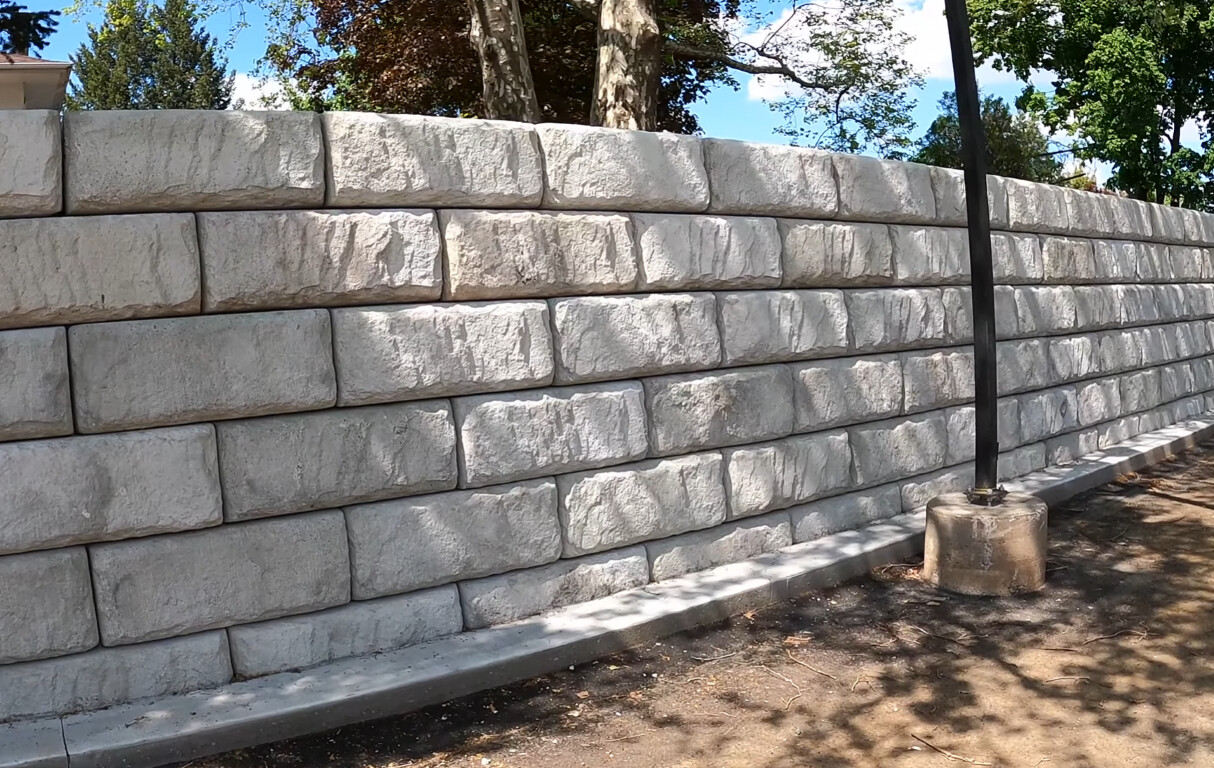
Concrete block or concrete masonry unit walls balance cost, strength, and appearance. Blocks stack and interlock to create sturdy walls that handle most residential applications. We install proper footings, reinforce with rebar and grout, and cap walls to shed water. The modular nature of blocks allows for curves and angles that accommodate landscape features.
Block walls work well for medium-height applications up to 6 or 7 feet in most situations. They cost less than poured concrete while providing good structural performance. Various block styles and finishes let you match architectural styles or create specific looks. Many homeowners choose block walls for their versatility and reasonable cost.
Segmental Retaining Walls
Segmental retaining wall blocks are designed specifically for retaining applications. These interlocking units rely on weight and friction rather than mortar. They work well for lower walls and terraced applications. Installation is faster than poured concrete and the modular design creates attractive finished appearance.
We use quality manufactured retaining wall systems with proven track records. Proper base preparation and correct installation techniques ensure these walls perform as designed. Drainage behind the wall is critical for long-term stability. These walls suit residential landscaping projects where appearance matters as much as function. Similar attention to proper installation applies to all our work, from walls to patio construction.
Critical Elements of Wall Construction
Retaining wall failures usually trace back to poor construction practices. Skipping important steps or using inadequate materials causes problems that show up months or years later. We follow engineering principles that ensure walls stand up to soil pressure and weather over time.
Foundation and Footing Requirements
Every retaining wall needs a solid foundation below the frost line. Walls placed on inadequate footings settle, crack, and eventually fail. We excavate to proper depth based on wall height and soil conditions. The footing must be level and adequately sized to distribute wall weight. Reinforcement in footings prevents cracking from soil movement.
Footing depth in New Hampshire must account for frost penetration. Shallow footings heave during freeze-thaw cycles, causing walls to crack and lean. We know local frost depths and size footings accordingly. This same foundation knowledge applies when we install building foundations and other structural concrete.
Drainage Systems
Water pressure behind retaining walls causes most failures. Proper drainage removes water before pressure builds up. We install drainage pipes at the base of walls to collect and redirect water. Gravel backfill allows water to flow to drain pipes rather than building pressure against the wall. Some situations require additional drainage measures like surface swales or catch basins.
Weep holes in concrete walls allow water to drain through at regular intervals. Without adequate drainage, even well-built walls eventually fail from hydrostatic pressure. We design drainage systems based on soil type, water table levels, and expected runoff. This prevents problems before they start.
Proper Backfilling and Compaction
Backfill material and compaction affect long-term wall stability. We use appropriate gravel or crushed stone behind walls for drainage. This material gets placed and compacted in layers to prevent settling. Poor backfilling leads to soil movement that puts excessive pressure on walls.
The area behind and above walls needs proper grading to direct surface water away from the wall. This prevents water from saturating backfill and creating pressure. We coordinate wall construction with overall site grading for complete drainage solutions.
Retaining Wall Questions
Need a Retaining Wall Solution?
Let us evaluate your property and recommend the right retaining wall for your needs. Contact us today for expert advice and a detailed estimate.